Every Shopee order you fulfill hands your customer data to Shopee — not to you. Email marketing is how Philippine ecommerce sellers build a direct line to buyers that no marketplace can take away. For sellers ready to stop renting audience access and start owning it, email is the channel with the highest return and the lowest ongoing cost of any digital marketing tool available in the Philippines.
| ₱34–₱42 | 5–10% | 40–60% |
| Return per ₱1 spent on email marketing, per Litmus’s 2024 State of Email Marketing report | Abandoned cart emails recover this share of abandoned sessions in a 3-email sequence, per Klaviyo ecommerce benchmark data | Typical open rate for welcome and transactional emails, per Mailchimp’s email marketing benchmarks |

Why Should Philippine Ecommerce Sellers Build an Email List?
Shopee PH and Lazada PH are where most Filipino online shoppers buy. They are also where Philippine sellers have the least control.
When a buyer purchases from your Shopee or Lazada store, the marketplace owns that transaction record. You receive the order. The marketplace keeps the customer relationship — including the email address, the purchase history, and the right to recommend your competitor in the next session. Email marketing gives Philippine ecommerce sellers a direct channel to buyers that operates independently of any marketplace’s algorithm, commission structure, or policy change.
The practical implication: a seller with 5,000 email subscribers can drive sales on a Tuesday in May without running Shopee Ads, spending on Meta campaigns, or waiting for TikTok’s algorithm to push a live stream. That direct access to buyers who have already purchased from you — and consented to hear from you again — is what makes email the most capital-efficient marketing channel available to Philippine ecommerce SMEs.
There is a second reason email matters specifically in the Philippine market. Filipinos are among the highest email-checking populations in Southeast Asia per multiple digital behavior surveys, with high rates of email access via mobile. The inbox is not a legacy channel here — it is a primary daily touchpoint, accessed on the same smartphone buyers use to browse Shopee and check Facebook.

How Do You Choose the Right Email Platform for Your Philippine Store?
The right platform depends on where your store lives and how many contacts you have.
Philippine ecommerce sellers have four serious email platform options: Mailchimp (best starting point for beginners), Klaviyo (best for Shopify and WooCommerce stores that need advanced ecommerce automation), Brevo (best for large contact lists on a controlled budget), and Omnisend (best for sellers who want combined email and SMS). All four offer free tiers. The right choice is determined by your store platform integration, your contact list size, and how much automation complexity you need at launch.
Here is how the four platforms compare on criteria that matter for Philippine sellers:
| Platform | Free Tier | Paid Plan Starts At | Best Integration | Standout for PH Sellers |
|---|---|---|---|---|
| Mailchimp | 500 contacts, 1,000 sends/month | ~₱500–₱900/month | Shopify, WooCommerce, standalone | Easiest onboarding; largest tutorial library |
| Klaviyo | 500 contacts, 500 sends/month | ~₱1,600–₱2,200/month | Shopify, WooCommerce (deep sync) | Best abandoned cart and post-purchase flows |
| Brevo | 300 emails/day, unlimited contacts | ~₱900–₱1,500/month | WooCommerce, most platforms via API | Pricing by send volume — cost-efficient for large lists |
| Omnisend | 500 contacts, 500 emails/month | ~₱900–₱1,400/month | Shopify, WooCommerce | Built-in SMS — useful where SMS still drives PH conversions |
Pricing converted from USD at approximately ₱56–₱57/USD. Exact PHP pricing depends on your payment currency and the current exchange rate at time of purchase.
For most Philippine sellers starting from zero: use Mailchimp’s free plan to validate your first campaigns. When you hit 500 contacts or need abandoned cart automation, migrate to the platform that fits your store tech stack — Klaviyo if you are on Shopify or WooCommerce, Brevo if your list is large and your campaigns are simple.
One clarification on marketplace sellers: none of these platforms can directly integrate with your Shopee or Lazada seller account. You will build your list through independent channels (covered in the next section). The platform integrations listed above apply to sellers who also operate an independent website.
How Do You Build an Email List as a Philippine Ecommerce Seller?
The method varies depending on whether you sell on a marketplace only, run your own website, or both.
Philippine ecommerce sellers build email lists through four primary channels: packaging inserts with QR codes that lead to opt-in landing pages, lead magnet offers promoted through Meta Ads (Facebook and Instagram) targeting buyers in your product category, website pop-up forms offering a first-purchase discount, and post-purchase sequences that capture email from buyers who have already converted. Sellers who combine all four methods consistently build lists faster than those relying on a single channel.
For marketplace-only sellers (Shopee PH and Lazada PH):
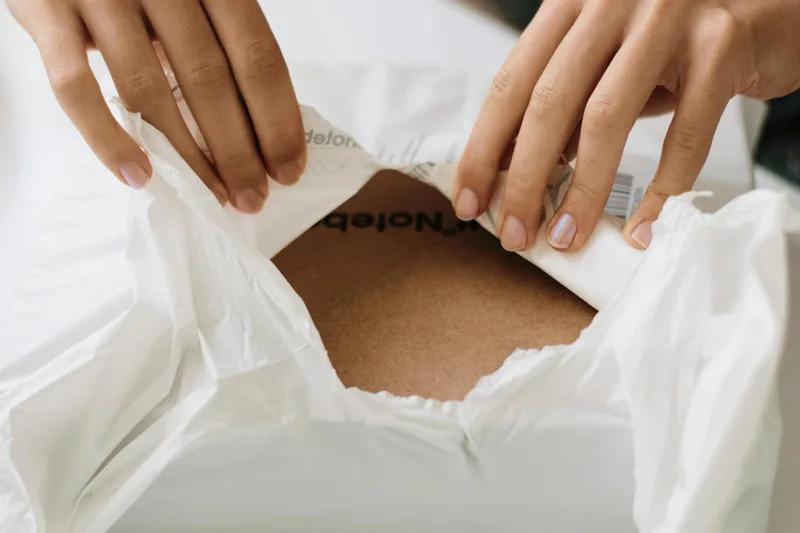
Your most cost-effective option is a packaging insert — a small card inside every parcel that directs buyers to a landing page in exchange for a discount code or exclusive offer. A QR code printed on the insert reduces the friction between physical packaging and digital opt-in. Buyers who already purchased from you and liked the product are your highest-intent list-building audience; converting even 10–15% of your monthly Shopee orders into email subscribers builds a meaningful list within 90 days.
For sellers with an independent website:
A standard exit-intent pop-up offering 10–15% off the first order typically converts 3–8% of site visitors into email subscribers, based on commonly reported ecommerce benchmarks. Install this before running any paid traffic — every visitor who leaves without purchasing is a list-building opportunity you cannot recover retroactively.
Facebook and Instagram Ads for list building:
Meta lead generation campaigns in the Philippines can generate email subscriber leads for approximately ₱5–₱25 per lead for most ecommerce product categories, based on ranges commonly reported in Philippine digital marketing communities — though costs vary significantly by niche, audience quality, and creative. A monthly budget of ₱5,000–₱15,000 dedicated to list-building ads can add 500–2,000 new subscribers per month if targeting and lead magnet quality are strong.
What Email Campaigns Should You Run First?
Start with three: a welcome series, an abandoned cart sequence, and a post-purchase flow. In that order.
For Philippine ecommerce sellers beginning email marketing, the highest-ROI starting point is three automated sequences rather than broadcast campaigns: a 3-email welcome series that delivers the promised discount and introduces your brand, a 3-email abandoned cart sequence that recovers buyers who added products without checking out, and a post-purchase sequence that drives repeat orders 14–30 days after the first sale. These three automations generate revenue every day without manual work, and they cover the three highest-value buyer moments in any ecommerce customer journey.
Welcome Series (3 emails, sent over 5–7 days):
- Email 1 (immediate): deliver the opt-in incentive (discount code or freebie), confirm what subscribers will receive, introduce your brand story in 3–4 sentences
- Email 2 (day 2–3): your best-selling products with clear pricing in ₱ and a direct link to purchase
- Email 3 (day 5–7): social proof — reviews, customer photos, or a brief case study showing a satisfied buyer’s result
Abandoned Cart Sequence (3 emails over 48 hours):
- Email 1 (1 hour after abandonment): “you left something behind” — simple reminder with cart contents and checkout link
- Email 2 (12 hours after abandonment): address the most common objection in your product category (shipping cost, product quality concern, payment options including GCash and COD)
- Email 3 (24–48 hours after abandonment): time-limited incentive — a ₱50–₱100 discount or free shipping offer with a 24-hour expiry
Post-Purchase Sequence (triggered 14–30 days after first purchase):
- Email 1 (14 days post-purchase): check-in asking about product satisfaction; include review request
- Email 2 (30 days post-purchase): recommend complementary products from your catalog; offer a loyalty discount for second purchase
- Email 3 (optional, 45–60 days): replenishment reminder if your product category has natural reorder timing (skincare, supplements, consumables)
What Benchmarks Should You Track for Philippine Ecommerce Email?
Five metrics determine whether your email program is working: open rate (whether subject lines earn the click), click-through rate (whether email content earns action), abandoned cart recovery rate (whether your sequence persuades hesitant buyers), unsubscribe rate (whether your sending frequency and relevance are calibrated correctly), and list growth rate (whether new subscribers offset churn). Track these five before optimizing anything else.
These five metrics tell you whether your email program is working before you have enough revenue data to draw conclusions.
| Metric | Healthy Range (Ecommerce) | Source | What to Do if Below |
|---|---|---|---|
| Open rate (promotional) | 15–25% | Mailchimp ecommerce benchmarks | Test subject lines; remove inactive subscribers |
| Open rate (welcome / transactional) | 40–60% | Mailchimp ecommerce benchmarks | Check spam placement; review from-name clarity |
| Click-through rate | 1–3% | Klaviyo 2024 ecommerce benchmarks | Test CTA button placement; reduce links per email |
| Abandoned cart recovery rate | 5–10% | Klaviyo ecommerce benchmarks | Add objection-handling to email 2; test incentive in email 3 |
| Unsubscribe rate | Below 0.5% per send | Industry standard threshold | Check send frequency; audit list for misaligned subscribers |
One benchmark that matters specifically in the Philippines: COD-related friction in cart abandonment. Philippine buyers who add to cart and leave often do so because they are unsure whether COD is available on your website (COD availability is expected on Shopee and Lazada but not assumed on independent sites). If your abandoned cart recovery rate falls below 3%, test adding explicit COD availability messaging in your first abandoned cart email.
Frequently Asked Questions
Below are the questions Philippine ecommerce sellers most commonly ask when starting email marketing — covering platform selection, list building for marketplace sellers, benchmark expectations, and how quickly the channel generates results.
Can I do email marketing if I only sell on Shopee or Lazada?
Yes — but you will need to build your list independently, since Shopee and Lazada do not share buyer email addresses with sellers. Practical list-building options for marketplace-only sellers include adding a QR code to your packaging that leads to a landing page offering a discount or freebie in exchange for an email address, running Facebook or Instagram Ads targeting buyers in your product category with a lead magnet offer, or running a giveaway through TikTok or Facebook that requires email signup. Even 200–300 subscribers from your most loyal buyers is enough to begin testing campaigns before investing further.
What is the best email platform for beginners in the Philippines?
Mailchimp is the most accessible starting point for Philippine sellers with no prior email marketing experience — its free plan supports up to 500 contacts with basic campaign and automation tools. Sellers with a WooCommerce or Shopify-connected store who need advanced abandoned cart automation should consider Klaviyo. Brevo is the most cost-efficient option for sellers who already have a large contact list, as its pricing is based on monthly email volume rather than contact count.
What open rate should I expect from ecommerce emails in the Philippines?
Transactional emails (order confirmations, shipping updates) typically see 40–60% open rates. Promotional emails to your full list typically see 15–25% open rates, per Mailchimp’s industry benchmarks for ecommerce. Welcome emails — the first email a new subscriber receives — consistently outperform promotional sends. If your promotional emails fall below 15%, prioritize list hygiene by removing inactive subscribers and testing subject lines before scaling send volume.
How quickly can I expect results from email marketing for my Philippine ecommerce store?
Transactional emails and welcome sequences generate revenue within days of setup. Abandoned cart emails begin recovering revenue as soon as you have checkout traffic. Promotional campaigns require a minimum list size of roughly 200–500 active subscribers before results are statistically meaningful. Growing a list of 1,000–3,000 qualified Philippine ecommerce buyers typically takes 3–6 months using consistent lead generation tactics — and that is the list size where email begins functioning as a reliable, repeatable revenue channel.
Building your email list from Shopee and Lazada buyers requires driving those buyers to a channel you own. Learn how organic search traffic builds that audience without paid spend: the ecommerce SEO guide for Philippine sellers covers ranking strategies sized for Philippine sellers in 2026. Read the Philippine ecommerce SEO guide →